A family name forged in industry
Robert Wood Johnson III was born on September 9, 1920, in New Brunswick, New Jersey. His name already carried immense gravitas. It belonged to a lineage shaped by enterprise, discipline, and public consequence. He was the son of Robert Wood Johnson II and Elizabeth Dixon Ross Johnson. He was also the grandson of Robert Wood Johnson I and Evangeline Brewster Armstrong Johnson.
That ancestry mattered in a profound way. He did not merely inherit wealth. He inherited expectation, scrutiny, and continuity. In large industrial families, the third generation often becomes the custodian. The founder creates. The second generation enlarges. The third generation must preserve.
Robert Wood Johnson III was an only child on his father’s side. That single fact intensified the family gaze. There was no sibling crowd to dilute obligation. He stood alone beneath a very tall name. He also had a half sister, Sheila Johnson, from his father’s later marriage. Even wealthy dynasties carry private fractures.
His personal life added another layer. He married Betty Wold in 1943. Their marriage became a central artery in the family story. Together they had five children. Those children extended the Johnson name into new public spheres, especially business, philanthropy, and sports.
| Family Member | Relationship | Notable Connection |
|---|---|---|
| Robert Wood Johnson I | Grandfather | Early Johnson and Johnson founder figure |
| Robert Wood Johnson II | Father | Corporate leader and later family patriarch |
| Elizabeth Dixon Ross Johnson | Mother | Matriarch of the immediate family |
| Sheila Johnson | Half sister | Daughter from his father’s later marriage |
| Betty Wold | Wife | Married him in 1943 |
| Robert Wood Johnson IV | Son | Known widely as Woody Johnson |
| Keith Wold Johnson | Son | Died young |
| Elizabeth Ross Johnson Whitall | Daughter | Also called Libet |
| Willard Trotter Case Johnson | Son | Known as Billy, died young |
| Christopher Wold Johnson | Son | Later prominent in the Jets organization |
Wartime service and the making of a businessman
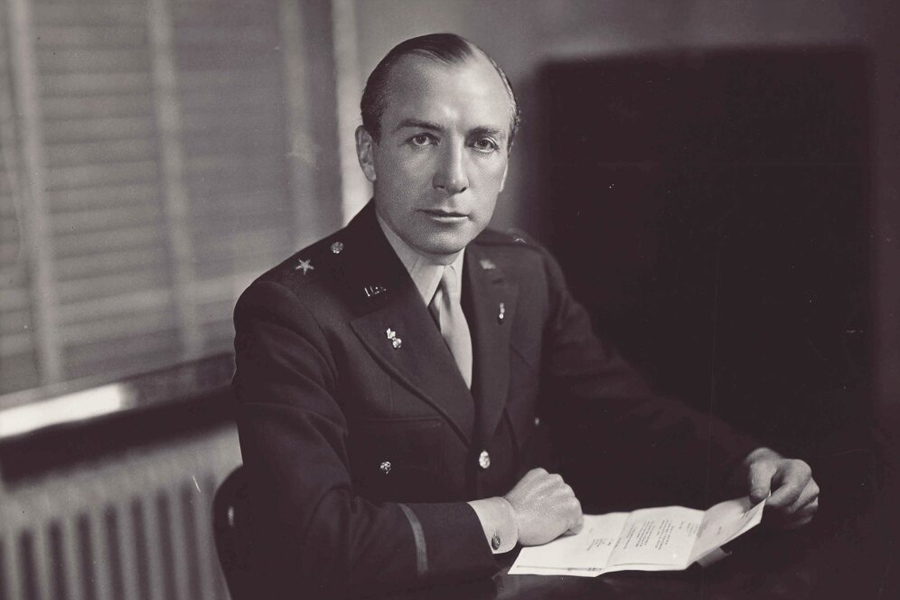
Johnson joined Johnson and Johnson in 1941. The world soon shifted around him. World War II interrupted ordinary ambitions across his generation. He served in the Army in England, France, and Germany. That service gave his life a dimension beyond inheritance.
The war years were formative. They placed him inside history rather than above it. He was not a sheltered heir during those years. He was a soldier navigating a brutal international conflict. Such service often tempers entitlement with contingency. It also reminds observers that dynasties exist inside national emergencies.
After the war, he returned to the company. He did not leap instantly into command. His ascent was incremental and administrative. He joined the executive committee in 1954. He became executive vice president for marketing in 1955. He then became executive vice president and general manager in 1960. By 1961, he was president of Johnson and Johnson. In 1963, he became vice chairman of the executive committee.
That progression mattered. It suggested competence, not mere ornament. He moved through the company in stages. Each promotion reflected confidence in his managerial ability. He operated inside a corporation that was already sprawling and influential. The stakes were commercial, reputational, and familial.
Leadership at Johnson and Johnson
His presidency represented a crucial chapter in the company’s evolution. Johnson and Johnson was already a formidable enterprise. Yet family businesses often become arenas of invisible tension. The balance between bloodline and performance can prove unstable. Robert Wood Johnson III lived inside that tension.
He occupied the presidency during a period of transformation. Corporate governance was changing. Professional management was gaining authority. Family control no longer felt automatic. These shifts complicated his tenure. They also foreshadowed his eventual removal.
In 1965, his father fired him. That event altered both his career and his family narrative. It also marked a symbolic transition for the corporation. Philip B. Hofmann became president. He was the first non-Johnson president since 1887. That fact is striking. It reveals how unusual the family’s corporate dominance had been.
The dismissal was not a trivial episode. It exposed the precarious nature of dynastic authority. Titles can look permanent until they vanish. Even in elite families, succession can fracture. The polished exterior of a business empire often conceals domestic rupture. For Johnson, the event was both professional and personal.
Marriage, children, and the widening family network
Robert Wood Johnson III and Betty Wold built a large family. They had five children, each carrying parts of the broader legacy. Their names reflected familial continuity and elaborate naming customs. The children were Robert Wood Johnson IV, Keith Wold Johnson, Elizabeth Ross Johnson Whitall, Willard Trotter Case Johnson, and Christopher Wold Johnson.
Woody Johnson, the most visible of the children, became especially well known. He later owned the New York Jets. He also served as the United States ambassador to the United Kingdom. Christopher Johnson likewise became recognized in the Jets organization. Libet Johnson Whitall appeared in the family record with a quieter public profile.
Two sons died young. Keith Wold Johnson and Billy Johnson both left the family early. That loss deepened the story. Wealth can cushion many burdens. It cannot shield against mortality. In dynastic families, death often punctures the illusion of permanence. The Johnson family story therefore contains both stature and sorrow.
The next generation further widened the tree. Woody Johnson’s children included Casey Johnson, Jaime Johnson, Daisy Johnson, Robert Wood Johnson V, and Jack Wood Johnson. Ava-Monroe Johnson is also associated with Casey’s line. The family did not remain static. It kept branching into new territories. Each branch carried the old name in a revised setting.
Illness, departure, and later pursuits
After leaving the presidency, Robert Wood Johnson III did not disappear. He attempted to begin Johnson Industries in Menlo Park. That effort was hindered by illness. His later years were shaped by diminished health rather than corporate ascendancy. Illness can compress ambition with unforgiving precision.
He also served on the Robert Wood Johnson Foundation board. His role there lasted for ten years. That appointment preserved his connection to the family’s philanthropic machinery. The foundation became one of the lasting instruments of the Johnson name. Through it, the family’s influence extended beyond business into public welfare.
His path after 1965 shows another pattern. A fallen executive may still remain influential. Power often changes shape instead of evaporating. Johnson moved from corporate command toward advisory and philanthropic participation. That shift reflected both circumstance and adaptation. It also showed how dynastic reputations can outlive formal office.
The family’s broader visibility increased through public service and sports ownership. The Johnson name appeared in boardrooms, on charitable platforms, and in athletic leadership. Such breadth made the family unusual. It was not merely affluent. It was multifaceted. Its members occupied different public roles while remaining linked by lineage.
Legacy measured in business and memory
Robert Wood Johnson III died of cancer in 1970 in Fort Lauderdale, Florida. He was only 50 years old. That early death gave his life a truncated architecture. He had already lived through war, marriage, corporate ascent, dismissal, and illness. He did not reach old age, yet his family influence persisted.
His legacy rests in several overlapping domains. One is Johnson and Johnson itself. Another is the Robert Wood Johnson Foundation. A third is the later prominence of his descendants. His children and grandchildren ensured that the family remained visible. Their activities extended across business, philanthropy, diplomacy, and sports.
The Johnson family remains compelling because it combines public power with intimate turbulence. It includes founders, executives, heirs, spouses, and descendants. It also includes separations, deaths, and redefinitions of status. That mixture gives the family history texture. It feels less like a corporate ledger and more like an inherited chronicle.
Robert Wood Johnson III occupies a distinctive position in that chronicle. He was not the founder. He was not the final steward. He was a transitional figure with real authority and real vulnerability. He belonged to a lineage built on industrial might. He also embodied the human cost of succession. His life linked the polished exterior of American enterprise with the frailty hidden beneath it.
Key Takeaways
Robert Wood Johnson III was born on September 9, 1920, into a formidable industrial dynasty. He was the son of Robert Wood Johnson II and the grandson of Robert Wood Johnson I. He married Betty Wold in 1943 and had five children. His career at Johnson and Johnson rose steadily from 1941 to 1963. He became president in 1961 and vice chairman in 1963. In 1965, his father removed him from the presidency. Philip B. Hofmann replaced him as the first non-Johnson president since 1887. Afterward, he pursued Johnson Industries and served ten years on the Robert Wood Johnson Foundation board. He died of cancer in 1970 at age 50. His legacy continued through his children and the wider Johnson family network.