Early Life and Cultural Roots
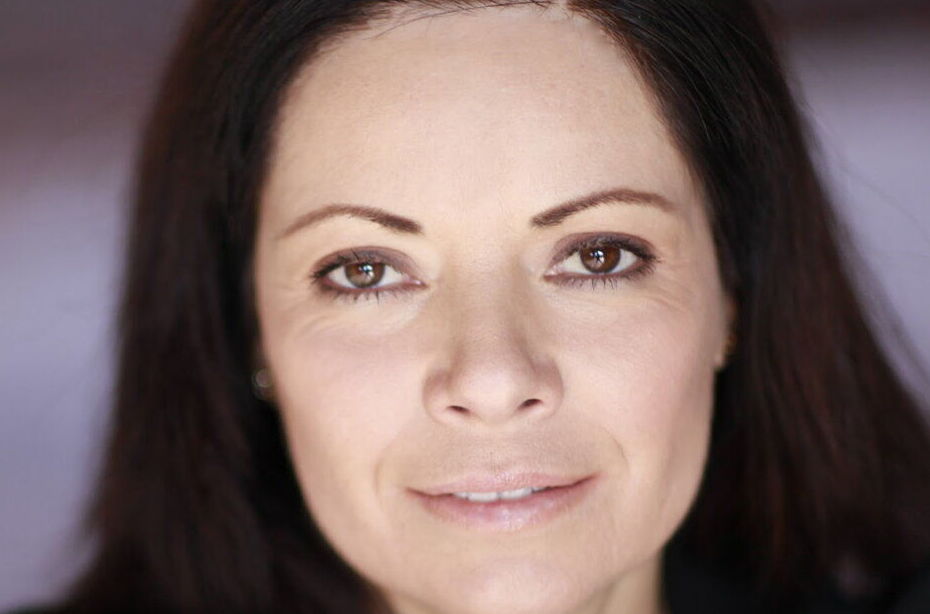
Begoña Plaza occupies an unusual place in contemporary Spanish American culture. She moves comfortably among acting, directing, writing, and documentary stewardship. Her career resists easy categorization because it is richly braided. Each creative branch reinforces the others with uncommon coherence. She treats memory as material, not decoration. That habit gives her work a distinctive gravitas.
Begoña del Pilar Plazaetxea Goyenetxe was born in Bogotá on July 12, 1966. Her early years reflected both Basque rigor and Colombian vitality. By 1968, the family had returned to Gernika, a town shadowed by history. In 1973, they migrated to Hollywood, where her father opened a bakery. That shop became both livelihood and cultural anchor. The household retained Spanish, English, and Basque speech.
Her father survived the April 26, 1937 bombing of Gernika. That ordeal later informed Plaza’s documentary conscience. Her mother, born in Colombia to a Basque father, fostered bilingual fluency from infancy. Between 1973 and 1992, Plaza lived across Colombia, Spain, and the United States. Those crossings sharpened her adaptability and accent control. She ultimately absorbed five major cities into her personal geography.
| Year | Place | Milestone |
|---|---|---|
| 1966 | Bogotá | Birth |
| 1968 | Gernika | Family returns to Euskadi |
| 1973 | Hollywood | Bakery opens |
| 1975 | Hollywood | Screen debut in Big Sister |
| 1984 | Los Angeles | Major studio acting begins |
Screen Career and Cinematic Range
Plaza first appeared on screen at age nine in Big Sister. Her professional rise accelerated in 1986 with Heartbreak Ridge. The role placed her inside a major studio production environment. She then navigated war stories, thrillers, and crime dramas. Her bilingual command often shaped her casting. It also widened her transnational credibility.
| Year | Work | Role | Note |
|---|---|---|---|
| 1986 | Heartbreak Ridge | Supporting Actress | Major studio breakout |
| 1989 | Born on the Fourth of July | Spanish Interpreter | Language centered role |
| 1990 | Delta Force 2 The Colombian Connection | Lead Antagonist | Filmed in Colombia |
| 1995 | Heat | Police Detective | Crime ensemble |
| 1997 | Dark Justice | Guest Star | Barcelona production |
| 2003 | Souvenir Views | Writer and Director | Documentary debut |
| 2018 | Gernika Lives | Director | Historical documentary |
From 1989 through 1995, she built a durable film résumé. Born on the Fourth of July required precise interpreter work. Delta Force 2: The Colombian Connection cast her as a lead antagonist. Heat gave her a police detective role within a tense ensemble. In 1997, Dark Justice expanded her presence into Barcelona television. The project marked an early United States and Catalan collaboration.
Her 2003 documentary Souvenir Views marked a conceptual pivot. She wrote and directed it with measured editorial discipline. The film premiered in April 2003 before reaching an arts focused broadcast audience. That same year, her interests widened toward theatrical and literary experimentation. She had begun shaping a more reflective public identity. The shift signaled maturity rather than retreat.
Writing Stage Work and Documentary Resolve
Plaza’s writing career mirrors her screen work in ambition. She has authored five full length scripts and three one person shows. That output reflects both stamina and intellectual curiosity. In 2012, Teresa’s Ecstasy earned a 12 minute standing ovation. Its March and April run deepened her reputation in stage circles. By then, she had become equally credible onstage and behind a camera.
Quantum’s Big Picture arrived in 2021 as a 60 minute solo performance. The piece explored quantum mechanics through theatrical compression. That premise demanded clarity, wit, and disciplined timing. In 2015, The Persistence of Memory emerged in private workshop form. By 2024, Passion Flower of Spain had entered nonfiction development. The projected 320 page book extends her archival fascination.
Gernika Lives remains one of her most affecting achievements. Finished in 2019, the 40 minute documentary examines the April 26, 1937 bombing. Plaza interviewed survivors aged 80 to 95, including her father. Those testimonies render history intimate and immediate. The film refuses spectacle. Instead, it cultivates witness.
The narration came from her mentor, an American actor aged 86 during recording. His voice added seasoned dignity without theatrical excess. Plaza framed the documentary as civic archive and familial homage. She handled the material with patience and austerity. That restraint heightens the emotional voltage. The result feels durable and humane.
Family Life and Private Discipline
Family history deeply informs her artistic instincts. Her father, born in 1929, owned the Hollywood bakery from 1973 to 1985. Her mother, born in 1935 in Barranquilla, worked as a bilingual educator. Plaza’s former spouse was a Catalan artist. Their marriage lasted from 1989 to 1995. During that period, they also collaborated on two Barcelona exhibitions.
Their daughter, Caterina, was born on August 8, 1992, in Barcelona. Plaza raised her as a single mother after 1995. She balanced motherhood with international production schedules. Today, she divides her time between Manhattan and Barcelona. Each city receives roughly six months. She also keeps her professional life notably private.
Despite public recognition, Plaza avoids social media platforms. She prefers archival research, writing, and intimate collaboration. That discretion strengthens her focus. It also preserves a rare sense of mystery. Her life remains public in output, yet guarded in habit. She has inhabited five major cities with unusual fluidity.
Legacy and Cultural Reach
Plaza’s legacy extends beyond celebrity into cultural preservation. She works in Spanish, English, and Basque with notable ease. Her research travels have taken her across four continents. More than 1,200 recorded interview hours support her projects. Those materials form a formidable mnemonic reservoir. Few artists combine scholarship and performance so fluently.
Her influence reaches historical documentary, feature film, stage writing, and cultural exchange. She has remained active from 1986 into the present. Recognition has followed her across three continents. Emerging filmmakers value her methodical blend of intimacy and structure. Playwrights admire her patience with historical texture. Audiences respond to her quiet intensity.
Key Takeaways
Begoña Plaza exemplifies a rare artistic architecture. Her life began in Bogotá and unfolded through Gernika, Hollywood, New York, and Barcelona. She turned family memory into filmic inquiry and theatrical language. She also cultivated a body of work marked by bilingual dexterity. Across decades, she has balanced public visibility with private discipline. Her story remains expansive, exacting, and deeply cross cultural.