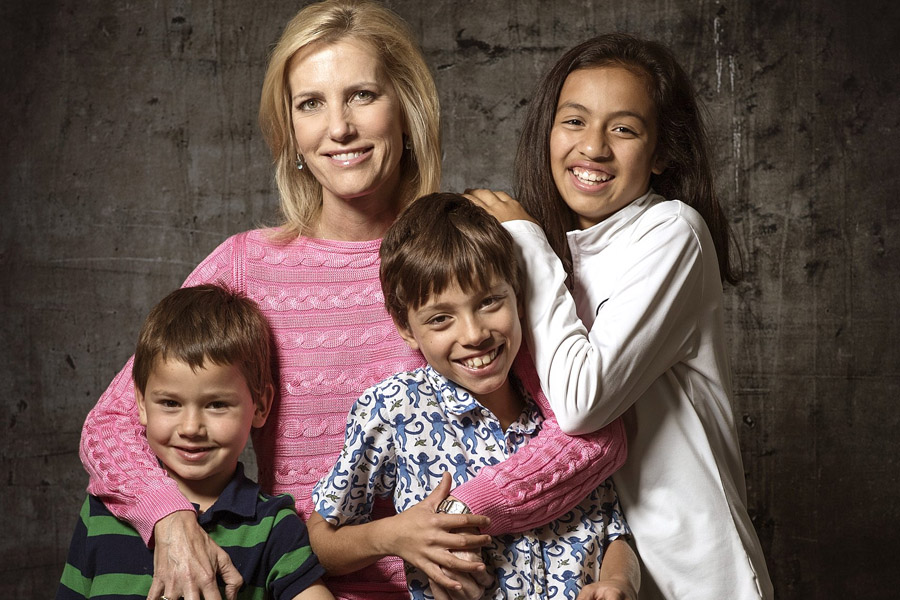
Family Background
Maria Caroline Ingraham occupies a peculiar place in public memory. She is known, yet not truly public. Her name appears in family references, adoption mentions, and occasional celebratory posts. Beyond that narrow aperture, her life remains deliberately sheltered. That restraint gives her story a subdued dignity.
Her mother, Laura Ingraham, is a widely recognized broadcaster and author. That prominence placed the family under persistent scrutiny for years. Still, Maria herself has remained largely beyond the theatrical glare. She is described as a private individual, not a media personality. That distinction matters greatly.
| Reported Detail | Information |
|---|---|
| Full name | Maria Caroline Ingraham |
| Publicly known relation | Eldest adopted daughter of Laura Ingraham |
| Reported origin | Guatemala |
| Reported adoption year | 2008 |
| Siblings | Michael Dmitri Ingraham, Nikolai Peter Ingraham |
| Public role | Private student and family member |
| Public career | None publicly verified |
| Personal net worth | No reliable public estimate |
This concise profile reveals more through its omissions than its entries. There is no sprawling professional archive attached to her name. There is no cultivated public brand. Instead, there is a careful border between family visibility and individual privacy. That border has remained mostly intact.
Adoption and Early Life
The most widely repeated milestone in Maria’s life is her reported adoption in 2008. Public accounts describe her as a young child from Guatemala. The essential facts entered the record, and then the narrative receded. That pattern is common in families that value discretion. It is also rare in celebrity adjacent households.
Adoption stories often arrive with sentimental gloss. This one is more restrained. The available details are spare, which limits speculation and protects intimacy. There is no authoritative public chronicle of her earliest routines, habits, or childhood preferences. Such silence is not emptiness. It is a sign of guardianship.
The year 2008 matters because it marks a full familial transition. A child entered a new home, a new culture, and a new cadence of life. That change would have shaped every subsequent year. Yet the public record offers only the broadest outline. That outline is enough to understand the framework, not the private texture.
For a child in a highly visible household, early privacy can be invaluable. It grants room for ordinary growth. It reduces the burden of constant narration. Maria’s early life appears to have been handled in that spirit. The public saw the milestone, but not the minutiae.
Education and Growth
Later reports shifted attention toward education. In 2024, family mentions placed Maria at a college transition point. Texas A and M University was cited as her destination in those mentions. That detail marked a new chapter. College often transforms a private child into a more independent adult.
The move to campus is a subtle but significant rite. It signals departure, ambition, and social reinvention. For someone raised in a household known to millions, that step can feel doubly momentous. The student becomes less an extension of the family narrative. She becomes a separate figure with her own timetable.
College life also supplies a rare kind of anonymity. Lecture halls are larger than family albums. Dorm corridors are less ceremonial than televised appearances. The rhythms are ordinary, which is precisely their strength. They offer a young person space to develop without excessive ornament.
Maria’s educational life has not been presented as a public spectacle. No academic honors, internships, or extracurricular campaigns dominate the record. That absence should not be mistaken for paucity. It simply means the important details remain where they belong. They remain within the family, the campus, and the student’s own private sphere.
Siblings and Household Dynamics
Maria is not the only adopted child in the family. Public profiles identify two younger brothers, Michael Dmitri Ingraham and Nikolai Peter Ingraham. Their arrivals followed Maria’s adoption in later years. Together, they formed a sibling structure that is both intimate and publicly named. That combination is unusual.
Family dynamics are always more complex than headlines admit. A household with three adopted children develops its own customs, jokes, and ceremonial habits. The public may know the names, but not the texture. It does not know the dinner rituals, the birthday customs, or the minor rivalries. Those details remain offstage.
What can be said is simple. Maria is the eldest among the adopted children. That position often carries a special kind of responsibility. Older siblings frequently model tone, steadiness, and adaptability. In a family with public attention, that role may feel even more pronounced. The elder child can become a quiet anchor.
The grandparents on Maria’s maternal side also appear in the family background. Anne Caroline and James Frederick Ingraham III are part of the broader genealogical frame. Such names enrich the portrait without intruding upon privacy. They suggest continuity across generations. They also remind readers that public families still possess private roots.
Public Mentions and Family Presence
Maria’s public visibility has largely come through family posts and celebratory references. Birthday messages, graduation notices, and brief mentions have offered fleeting glimpses. These glimpses are modest, not performative. They reveal affection more than biography. That is a notable difference.
| Year | Publicly reported moment | Significance |
|---|---|---|
| 2008 | Adoption reported | Family formation milestone |
| Later years | Sibling adoptions reported | Expanded household |
| 2024 | College transition mentioned | Move toward adult independence |
These moments create a skeletal timeline. They do not create a full biography. Still, they help situate Maria within a visible arc of growth. A child becomes a teenager, then a college student, then a more self defining adult. The timeline remains narrow, but it is coherent.
Family posts often matter because they are measured. They do not behave like gossip. They usually carry warmth, brevity, and a parent’s unembarrassed pride. In Maria’s case, those mentions appear to have shaped the public image more than any interview could. The image is affectionate and restrained. That combination is rare in modern media.
Media Attention and Privacy
Any family linked to a major public figure attracts speculation. That is almost an iron law of contemporary attention. In Maria’s case, some noisy claims have circulated on low credibility corners of the internet. Such material tends to inflate drama and compress truth. It should be treated cautiously.
The more reliable picture is far calmer. Maria is repeatedly treated as a private person. She is not presented as a spokesperson, entertainer, or business figure. Her name surfaces mainly in family contexts. That consistent framing is meaningful. It reflects a deliberate boundary around her identity.
Privacy, in this setting, functions like a protective architecture. It preserves autonomy. It reduces distortion. It also allows a young adult to mature without becoming an endlessly dissected artifact. For Maria, that architecture seems to have held. Her public footprint remains narrow, and that narrowness is instructive.
There is a tendency to mistake silence for insignificance. That is a shallow reading. Silence can indicate careful stewardship. It can also show that a family understands the cost of exposure. Maria’s relative obscurity is therefore not a defect. It is a kind of safeguard.
Key Takeaways
Maria Caroline Ingraham is best understood as a private individual within a highly visible family. Her publicly reported adoption in 2008 from Guatemala forms the central biographical fact. Later mentions suggest a college transition in 2024, which indicates movement toward adult independence. She is publicly associated with her mother, Laura Ingraham, and with two younger adopted brothers. No verified public career or personal net worth is available. Her story is notable because it remains restrained, familial, and carefully bounded.