Early Origins
Francine Lucas-Sinclair was born around 1971 in Teaneck, New Jersey. Her earliest years unfolded inside a household that looked affluent from the outside. Luxury objects, costly travel, and ornate gifts surrounded her childhood. Yet those comforts concealed a perilous criminal enterprise. At age three, in January 1975, the illusion collapsed during a federal raid.
Her father, Frank Lucas, was arrested for drug trafficking. The event ruptured the family structure with brutal speed. Francine was still too young to fully understand the magnitude of the upheaval. Still, the consequences shaped every later stage of her life. The family entered witness protection and relocated under the surname Walters. That abrupt displacement replaced familiarity with concealment.
Childhood Upheaval
The move to Albuquerque, New Mexico, introduced a sharp and disorienting transition. Wealth gave way to uncertainty, and secrecy became routine. Francine’s mother, Julianna Farrait, served a short prison term after the raid. The family’s emotional stability weakened further during that period. A second relocation followed in 1978, when they moved to San Juan, Puerto Rico.
That environment offered a more durable form of grounding. Francine lived with maternal grandparents and tried to assemble ordinary routines. School became an anchor amid volatility. Her father and mother continued to cycle through incarceration and release. By her adolescence, she had already endured repeated separations, reinventions, and public invisibility.
Education and Formation
Francine treated education as a practical refuge. In Puerto Rico, she excelled academically and developed an interest in communication. She later attended the University of Puerto Rico. In 1991, she graduated with a degree in public relations. That credential marked an important inflection point in her life.
The degree represented more than academic completion. It signaled deliberate self-authorship after years of instability. She had inherited a notorious surname, but she did not let it dictate her trajectory. Instead, she sought a professional identity separate from notoriety. Her later work reflected that preference for structure, service, and discretion.
Atlanta and Professional Reinvention
After college, Francine moved to Atlanta. The city offered scale, anonymity, and opportunity. She eventually built a career as a mortgage broker. That profession demanded precision, patience, and trust. It also placed her in a field far removed from the chaos of her childhood.
Mortgage brokerage suited a person accustomed to rebuilding. She worked with conventional, jumbo, FHA, and VA loan pathways. Those details mattered because homeownership often depends on technical fluency. Her career grounded her in everyday financial reality. It also demonstrated that reinvention can be methodical rather than dramatic.
Yellow Brick Roads
Francine’s most important public work came through Yellow Brick Roads. She founded the organization to support children of incarcerated parents. The mission addressed shame, isolation, and inherited stigma. Many children in those circumstances feel invisible. Francine understood that condition with unusual intimacy.
Yellow Brick Roads provided mentorship and practical encouragement. It also created a framework for emotional recognition. In 2007, she expanded that vision by connecting with Nicole and Ebony Barnes. Their collaboration widened the circle of support. The effort emphasized a simple and urgent principle: children should not inherit punishment for parental crimes.
Her advocacy had moral clarity without theatricality. She spoke from experience rather than abstraction. That distinction gave her message weight. She did not merely describe hardship. She translated it into service. The organization became a vehicle for that transformation.
Public Voice
Francine began appearing more visibly after the release of American Gangster in 2007. The film renewed public interest in her father’s history. That attention pushed her into a more public posture. Rather than retreat permanently, she used the attention constructively. She spoke about pain, identity, and renewal.
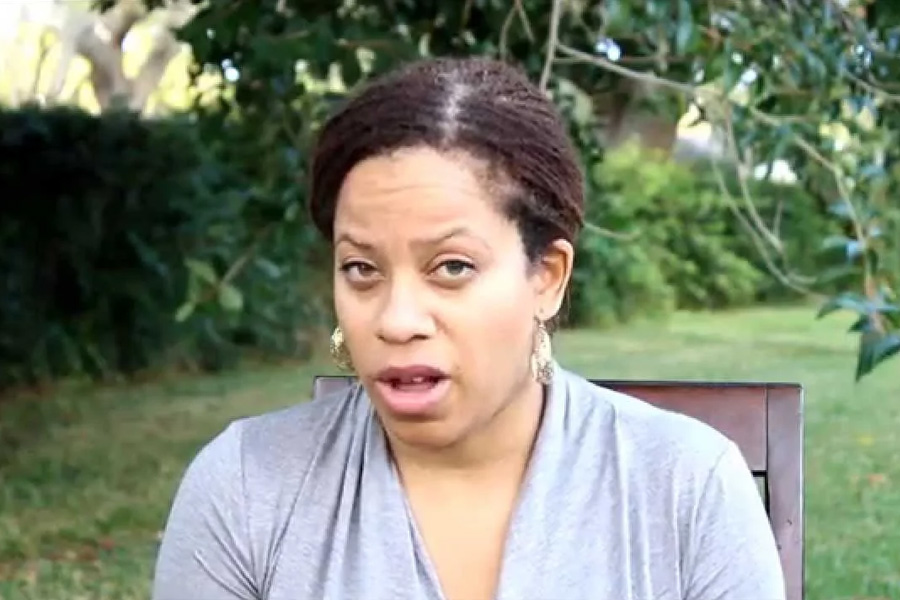
In February 2008, she spoke at Temple University’s Ambler Campus. Her public remarks focused on rebuilding after trauma. She also appeared on radio in 2014. In 2015, motivational videos circulated under titles such as Don’t let the past hold you back. These appearances expanded her reach without turning her into a spectacle. She used visibility as an instrument, not a destination.
Family Life
Francine married Mark Sinclair in the early 2000s. He is described as a tech professional. Their marriage gave her a steadier domestic setting. They raised two children in the Greater Atlanta area. Family life became a deliberate counterweight to the instability she had known.
She also maintained a complicated but enduring relationship with her parents. Her father remained in contact with her until his death in 2019. Her mother also stayed close. Those bonds contained both affection and damage. That duality reflects the difficulty of loving people whose choices caused profound harm.
Her siblings remained largely outside the public eye. The family included Frank Lucas Jr., Ray, Candace, Ruby, Betty, and a half-brother, Tony Walters. Public details about them are limited. That obscurity seems consistent with the family’s general preference for privacy. The surviving household appears structured around discretion rather than display.
Later Visibility
After 2019, Francine’s public presence became sparse. That quieter phase fits her long-standing preference for private steadiness. She maintained an X account associated with motivational speaking, but activity appears limited. There has been little high-profile coverage in 2024 and 2025. She has remained largely outside the churn of public controversy.
This reduced visibility does not indicate absence of purpose. It suggests a settled commitment to ordinary life. Her work has already left a durable impression through advocacy and community support. She moved from inherited infamy to purposeful restraint. That shift required discipline, not merely endurance.
Timeline of Major Moments
| Year | Age | Event |
|---|---|---|
| Circa 1971 | 0 | Born in Teaneck, New Jersey |
| January 1975 | 3 | Family raid and arrest of her father |
| 1978 | 6 | Relocation to San Juan, Puerto Rico |
| Circa 1981 | 9 | Family reunions after father’s release |
| Circa 1982 | 10 | Parents reincarcerated |
| 1991 | 19 to 20 | Graduates from the University of Puerto Rico |
| Early 2000s | About 30 | Moves to Atlanta and marries Mark Sinclair |
| 2001 | About 30 | Begins advocacy work for children of incarcerated parents |
| 2007 | About 36 | Expands Yellow Brick Roads after heightened public attention |
| February 2008 | About 37 | Speaks at Temple University |
| 2014 to 2015 | About 43 to 44 | Radio interview and motivational video appearances |
| May 2019 | About 48 | Her father dies |
| 2024 to 2025 | About 53 to 54 | Public profile remains low |
Key Takeaways
Francine Lucas-Sinclair’s life is defined by transformation under pressure. She was born into privilege, then forced into secrecy, instability, and repeated relocation. She responded by building a disciplined adult identity. Education, work, and family life gave her structural continuity.
Her advocacy is the most consequential expression of that reinvention. Yellow Brick Roads addressed a neglected population with uncommon specificity. Children of incarcerated parents often absorb shame they did not create. Francine built a platform to challenge that inheritance. Her work translated private suffering into public use.
Her professional life also reflects practical intelligence. Mortgage brokerage is not ornamental work. It requires exactness, credibility, and composure. Those traits align with her broader biography. She has lived through disruption and chosen composure.
Her story is not driven by spectacle. It is shaped by repair, privacy, and persistence. That makes it notable in a different register. Francine Lucas-Sinclair turned a hazardous origin into a sustained ethic of care.